
Progressive Muscle Relaxation
Have you ever clenched your fist to prevent getting angry? Probably. Ever clench your jaw to prevent screaming at someone? Most likely.
Have you ever systematically tensed each and every muscle group from your toes up to your head? I doubt it.
It may not be too surprising to hear that it has been close to a century that the idea of tensing your muscles to calm down has been an idea.
This concept, coined Progressive Muscle Relaxation (PMR), may well sound extreme to you, and honestly to me too, but it was a gradual process done over an extended period. The progressive nature of contracting and releasing the tension in your muscles follows all the way down through the body. So, it’s going to take time, a lot of it! This is evidenced from the fact that this version of this technique involved 200 hours of practice.
Over time, this technique of PMR has been refined, changed, standardised (if you wanted to be scientific about it) and it’s usage has been diversified. Jacobsen’s (1938) original 2-step process was long winded but was also intended for clinical and/or medicinal psychological practices. His original blueprint for this technique, now known as ‘Jacobean Relaxation’, was long-winded but the premise was pretty straightforward. The whole purpose was to make patients aware of the feelings of tension in muscles followed by the tension ‘draining away’ and contrasting feelings of relaxation being present. Try it out now, we won’t go through the 16 groups but let’s try it now.
Get comfortable on your chair, on the floor, wherever you are sat just make sure you are comfortable. Close your eyes and take a few slow, deep breaths. Inhale through your nose and exhale through your mouth. How does this feel?
Pick one of your muscles, whether this is a bicep or a thigh or calf or a forearm, whatever your choice is. This time, as you inhale gently but firmly squeeze the muscle you have chosen and hold. Now that you have held it, exhale and release the tension, let your muscle relax. Now that you have done this, sit and take note of how you feel. What did the tense muscle feel like? What did it feel like when you released the muscle tension? Take some time to reflect and note how the contrasting feelings felt.
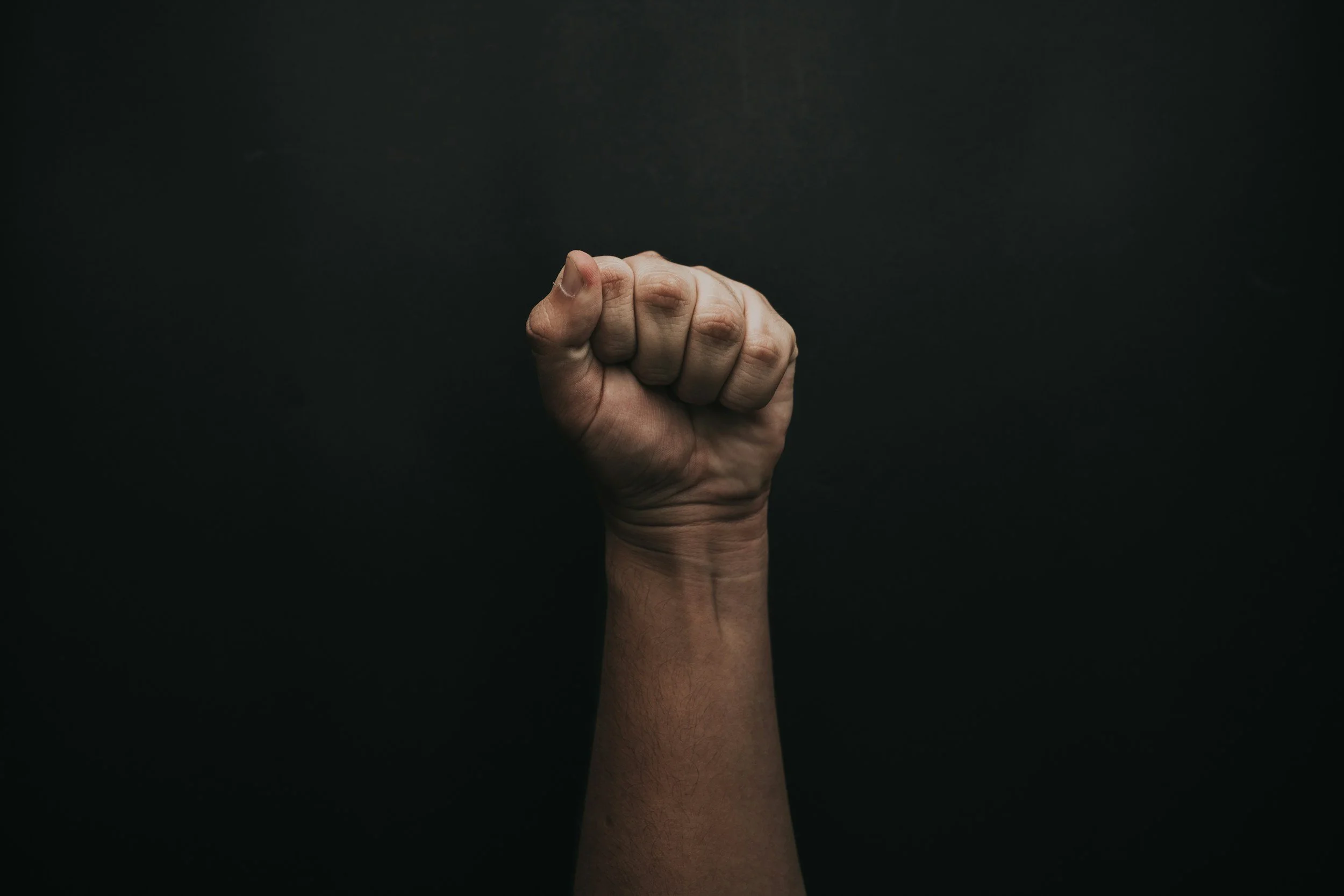
Obviously, we just do not have the time to spend 200 hours tensing and then relaxing our bodies, today’s world is a very different prospect to that in the late 1930s. You may be slightly relived to know that solutions to this little timing issue have been addressed over the last 50/60 years. Wolpe (1961) managed to reduce this extensive method to 6 sessions. This was mainly done by reducing the original 16 groups to 7 more focused areas. These were: arms, face, jaw, eyes, neck/shoulders, back/stomach/chest, and finally, legs.
One screaming alarm bell about this method is that some of these 7 groups are multiple groups shoved together. My answer to this would be for you to try and tense your neck and shoulders separately. I will wait a minute whilst you try it out. How was it? Difficult? Hard to do each one at a time? Perhaps the way to view Wolpe’s method would be that he has perhaps adapted it for mass use.
However, the PMR method was adapted further by Bernstein and Borkovec (1973). These two helped to standardise the method. In other words, they made the method of PMR more of a general procedure rather than a person-by-person, case-by-case exercise; this was a criticism of Jacobsen’s (1938) method. Furthermore, they provided some research to support the method’s effectiveness. Bernstein and Borkovec (1973) managed to make a step-by-step guide that steadily reduced the muscle groups from 16, to 7, to 4 over the course of sessions. The final session allowed for participants to ‘Relax through recall’ (all this means is basically picking a group and doing the process rather than needing to be coached through it). So, let’s try PMR again now that we have gathered a bit more of a precise method. Again, get comfortable on your chair, on the floor, wherever you are sat just make sure you are comfortable. Close your eyes and take a few slow, deep breaths. Pick your calf muscle, as you inhale tense your calf muscle and hold for 5 seconds. Then release the tension and relax your calf muscle as you breathe out. Now take 10-15 seconds to reflect on how this felt, and how the feelings of tensed and relaxed muscle feel.
Application to sport
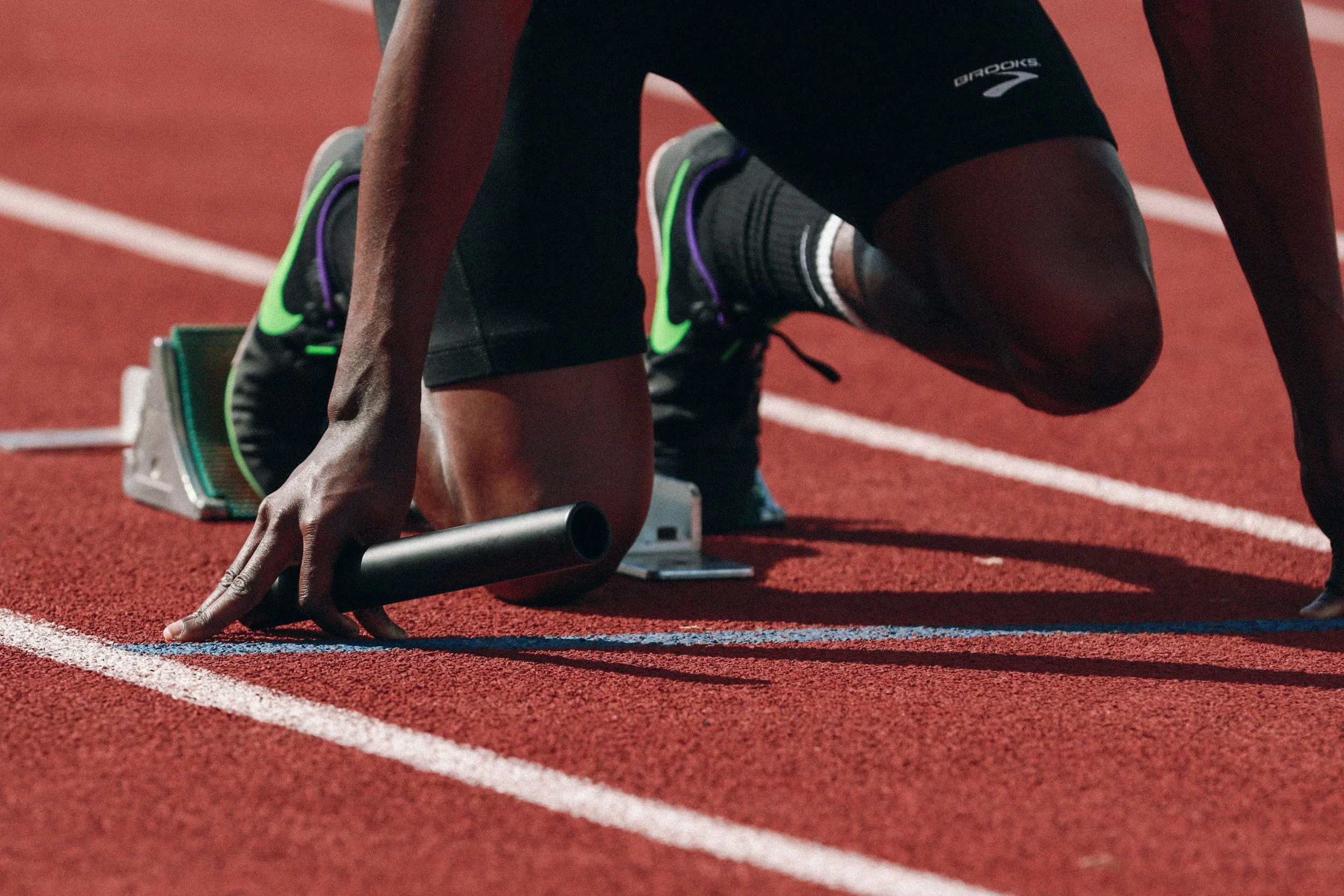
This method has helped to make PMR a more easily accessible relaxation technique. One thing though that you may be noticing, is does this have any application to a sport setting? Research suggests that PMR can be effective for athletes, but this is not an overwhelming finding. Furthermore, the technique’s effectiveness perhaps has a ceiling when it comes to practical use in sport.
For example, Battaglini et al. (2022) found that PMR was effective in reducing cognitive anxiety but that was where its influence stopped. This finding suggests that maybe the act of PMR can make athletes at least feel like something has worked, even if physically there is no indication this is the case.
Something to further complicate matters, Yadav et al.’s (2025) findings indicate that PMR does have an impact on the physical and mental wellness of athletes. The counterargument from Battaglini et al.’s (2022) findings would be that the impact PMR has is not a significant one. Yadav et al. (2025) went a step further with their analysis of PMR in sport, and started to suggest that it helps with athletes’ quality of sleep. More specifically, it helps with stress-induced muscle tension that occurs in sleep which is common among athletes pre-competition (this phenomenon is called ‘Sleep Bruxism’). One of the overall findings of this study was that PMR should be used in conjunction with a wider training programme with athletes, rather than as an isolated technique.
Perhaps the best middle ground or refinement of PMR in sport is Hagan, Pollmann and Schack’s (2017) method. Instead of just taking the overall technique at face value, they started to investigate the importance of timing in using PMR with the idea that it should not just be a standard daily use tool but could perhaps be used differently depending on how close to a competition an athlete is.
Hagan et al. (2017) developed a more specific plan for PMR usage for athletes. From 7-4 days out from competition, PMR should be used to focus on recovery, more specifically restorative sleep (deep sleep). This then changes from 3 days out to 1 day before competition day, as PMR should be used more in-line with Bernstein and Borkovec’s (1973) 4 muscle-group method. Finally, on competition day, PMR should be used in specific-short bursts to specifically to take away any excessive anxiety that could hinder performance. Liang et al. (2021) have provided support for the idea that PMR is effective in reducing pre-competition anxiety, albeit with a small sample size (14 people in the test group).
So what can you actually take from this?
Is it that PMR is a less long-winded process than it used to be? Is it, PMR can be used for different purposes? Is it, that PMR is definitely not for me and I will never be using it again in my life?
While PMR has undergone refinement, I still do not think it could be considered a ‘refined’ process. It is definitely a more general procedure than it used to be, there is a ‘right’ way to run through the process. Jacobsen’s (1938) original idea was very individual dependent, and was perhaps lacking the scientific rigour to be considered a repeatable process. Wolpe (1961) then started to refine the process and shorten the time taken to complete the extremely taxing process that came before. Bernstein and Borkovec (1973) moulded it for mass usage, making it repeatable and helping professionals make wider use of PMR. While the process was formed for clinical purposes, recent research has started to apply the process to sport settings, and assessing whether or not PMR does have any place in the performance sphere.
The findings of the recent research can be considered to show varied results, at best. While there has been support for PMR’s effectiveness in improving performance states, specifically in the run up to competitions (Hagan et al., 2017; Liang et al., 2021). Results also suggest that PMR’s effectiveness in the sporting space may have limits (Battaglini et al., 2022; Yadav et al., 2025).
The one thing you could, and maybe should take from this is that PMR is there for you to use if you choose to use it. Perhaps using it with the goal of reducing your anxiety may be all you can take from it, if you believe it works then it can work for you. If you are using it for a specific goal then this could perhaps get more complicated. I think you could probably take away from this that you should use PMR as you see fit. Make the technique personal to you. If you want to just use it as a quick-fire tool to immediately reduce some tension, you can. If you want to use it as a means of ensuring you have a higher quality of sleep, you can. If you want to use it to give you the impression of feeling more relaxed, you can. There really does not appear to be a right way to use PMR, so have at it, make it your own, and hopefully there is a useful blueprint for you to start in this post!
References
Battaglini, M.P., Pessôa Filho, D.M., Calais, S.L., Miyazaki, M.C.O.S, Neiva, C.M., Espada, M.C., … & Verardi, C.E.L. (2022). Analysis of progressive muscle relaxation on psychophysiological variables in basketball athletes. International journal of environmental research and public health, 19(24), 17065.
Bernstein, D.A., & Borkovec, T.D. (1973). Progressive relaxation training: A manual for helping professions.
Hagan, J.E., Pollmann, D., & Schack, T. (2017). Exploring temporal patterning of psychological skills usage during the week leading up to competition: Lessons for developing intervention programmes. PloS one, 12(8), e0181814.
Jacobsen, E. (1938). Progressive relaxation. Chicago: Univer.
Liang, D., Chen, S., Zhang, W., Xu, K., Li, D., … & Liu, C. (2021). Investigation of a progressive relaxation training intervention on precompetition anxiety and sports performance among collegiate student athletes. Frontiers in psychology, 11, 617541.
Wolpe, J. (1961). The systematic desensitization treatment of neuroses. The Journal of nervous and mental disease, 132(3), 189-203.
Yadav, N., Dhiman, C., Kapri, B.C., Reddy, T.O., & Pratap, M. (2025). Exploring The Impact Of Progressive Muscle Relaxation On Physical and Psychological Well-Being: A Focus On Sports Person Applications. Journal of Neonatal Surgery, 14(4), 479.