
What Can a Horse Teach Us About Confidence?
Confidence is often talked about as if it is something a rider either possesses or lacks. In riding environments, phrases like “just be more confident” or “ride with authority” are common phrases that are thrown around. However, many riders find that their confidence is unstable, shifting depending on the horse, the setting, or other elements outside of their control.
This highlights a deeper misunderstanding. Riders often assume that feeling nervous means they lack confidence. However, horses offer a different perspective. They don’t respond to the story a rider tells themselves about confidence; they respond to what is happening in the rider’s body.
This distinction is interesting and changes things.
Why Riders Often Misread Confidence
Nerves are a familiar part of horse riding. They can show up when getting on the horse, returning after a fall, or stepping into a higher level of challenge. In many riding environments, these sensations are quickly interpreted as a lack of confidence, reinforcing the belief that hesitation is a sign of weak confidence.
Research suggests confidence is not the absence of fear; it is the ability to function effectively in its presence. Athletes with high confidence often interpret physiological arousal differently and maintain effective performance under pressure (Hays et al., 2009). Confidence therefore coexists with anxiety rather than eliminating it entirely. When riders assume they must eliminate anxiety and nerves before they can perform well, tension often increases. They become more self-critical and reactive, which ironically undermines both their riding and their communication with the horse.
From this perspective, the issue is not that nerves exist, but how riders interpret them. This is where horses begin to reshape the conversation.
What Horses Actually Respond To
Horses evolved as prey animals, which means their survival depended on detecting subtle shifts in their environment. Changes in posture, muscle tone, breathing patterns, and movement carry meaning. That sensitivity remains central to how horses interpret human behaviour (Baba et al., 2019).
A horse is not evaluating whether a rider feels confident. It is responding to whether the rider is physically organised, regulated, and consistent. A rider who feels nervous but breathes steadily and applies clear aids is often easier for a horse to understand than someone who appears bold yet rides with unpredictability and tension.
Research into interactions between humans and horses support this. Elevated rider tension is associated with measurable stress responses in horses, including altered walking pattern, increased heart rate, and behavioural agitation (Keeling et al., 2009).
In practical terms, horses act less like judges of confidence and more like mirrors. They reflect physical tension and regulation far more than thoughts or self-talk.
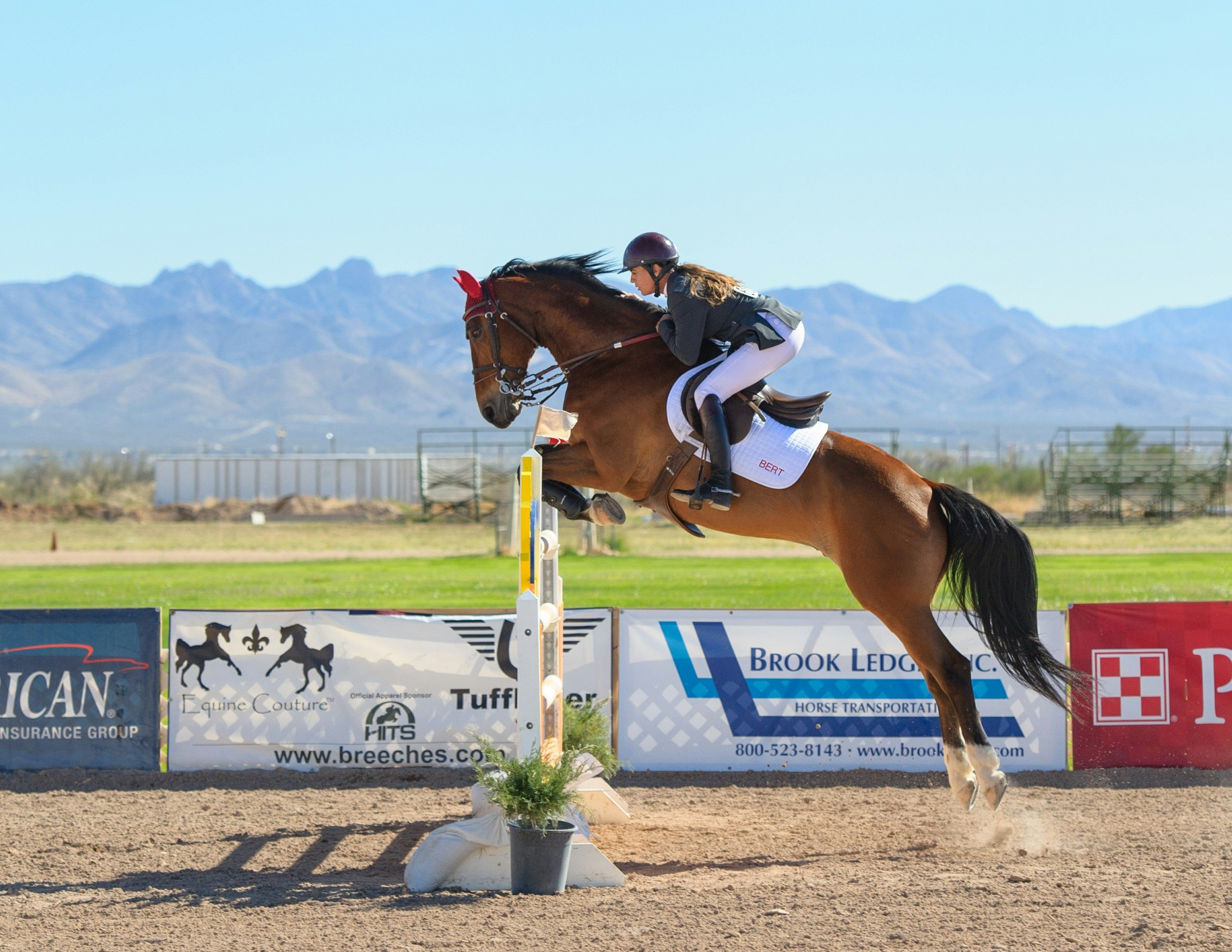
A More Useful Definition of Confidence in the Saddle
If horses respond to regulation and clarity rather than storytelling, confidence takes on a different meaning. It becomes less about personality or fearlessness and more about how effectively a rider manages their internal state under pressure.
Confidence, in this sense, is behavioural. It’s about staying present and communicating clearly while uncertainty exists. Psychological models such as self-efficacy theory describe confidence as dynamic and context-dependent, something that fluctuates and is shaped through interaction, not a fixed personal trait (Hays et al., 2009).
Many riders recognise that confidence often grows during action rather than before it. Once movement begins and attention shifts to rhythm, feel, and timing, nervous energy frequently reorganises into focus. Horses reinforce this process by responding positively to calm, consistent input, creating a feedback loop that strengthens the rider’s sense of capability (Lochbaum et al., 2022).
Confidence, then, is less something a rider waits to feel and more something that emerges through engagement.
Practical Lessons Horses Make Immediately Visible
The horse-rider partnership offers constant, real-time feedback about how confidence functions in practice. Several principles emerge again and again:
Self-regulation comes first:
Before riding the horse, effective riders stabilise themselves. Slowing the breath, softening unnecessary tension, and organising posture often changes the horse’s behaviour before any technical correction is applied.
Clarity outweighs force:
Horses don’t need bigger signals; they need clearer ones. Well-timed, consistent aids make sense to them, whereas force without precision often muddies the message. To a horse, confidence feels like calm organisation, not control through strength.
Confidence grows through engagement
Holding back until you feel fully confident can unintentionally keep you stuck. Riders often notice that confidence grows once they start.
Feedback is continuous
A horse’s relaxation, rhythm, or resistance provides immediate information about the rider’s internal state. Small shifts toward calm and organisation are often mirrored in the horse’s behaviour.
These lessons align with broader performance psychology findings showing that skilled performers anchor attention in controllable processes rather than emotional outcomes (Jones et al., 2007).
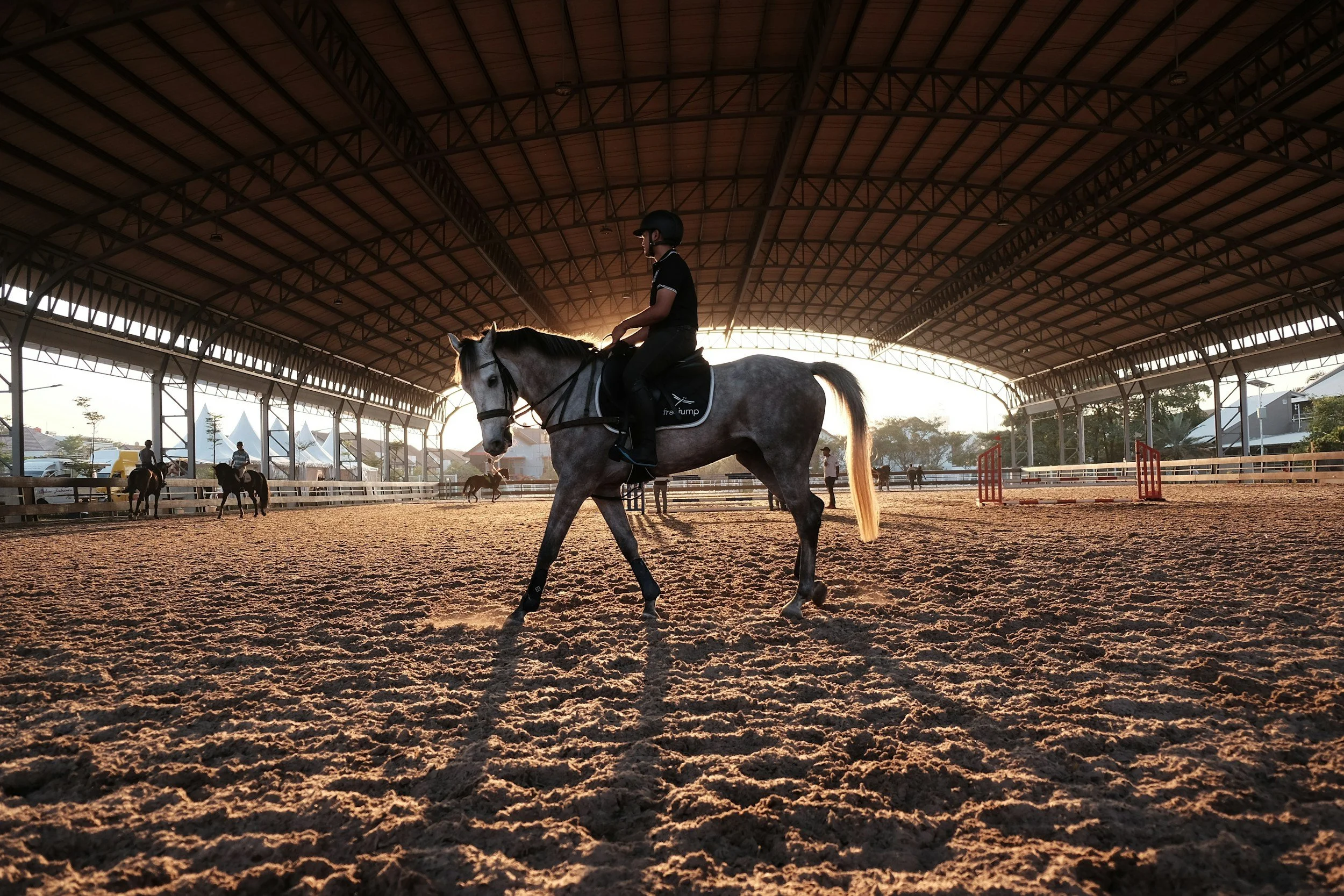
Beyond the Arena: Why This Perspective Matters
The implications extend beyond riding. Horses demonstrate that confidence is not about suppressing anxiety or projecting certainty. It is about responding skilfully while uncertainty is present. They reward regulation over storytelling, clarity over intensity, and presence over perfection.
This reframing removes the pressure to ‘feel’ a certain way before acting. Instead, it emphasises practising behaviours that support effective interaction. Confidence becomes something enacted repeatedly, through breathing, posture, timing, and decision-making, instead of something which is possessed.
In this sense, horses offer a rare kind of feedback. It is immediate, honest, and grounded in physiology rather than judgment. Riders who learn to interpret this feedback often find that confidence stops being an abstract goal and becomes a practical skill.
And that may be one of the most valuable lessons horses teach, not just about riding, but about functioning under pressure more broadly.
References
Baba, C., Kawai, M., & Takimoto-Inose, A. (2019). Are horses (Equus caballus) sensitive to human emotional cues?. Animals, 9(9), 630.
Hays, K., Thomas, O., Maynard, I., & Bawden, M. (2009). The role of confidence in world-class sport performance. Journal of sports sciences, 27(11), 1185-1199.
Jones, G., Hanton, S., & Connaughton, D. (2007). A framework of mental toughness in the world’s best performers. The sport psychologist, 21(2), 243-264.
Keeling, L. J., Jonare, L., & Lanneborn, L. (2009). Investigating horse–human interactions: The effect of a nervous human. The Veterinary Journal, 181(1), 70-71.
Lochbaum, M., Sherburn, M., Sisneros, C., Cooper, S., Lane, A. M., & Terry, P. C. (2022). Revisiting the self-confidence and sport performance relationship: a systematic review with meta-analysis. International journal of environmental research and public health, 19(11), 6381.